Most people pressure wash what they *see*: the front walk, the driveway, maybe a bit of siding near the patio.
The stuff that actually wrecks houses? It’s usually hiding in shade, seams, and runoff paths.
Look, pressure washing isn’t just “make it pretty.” Done right, it’s preventative maintenance. Done wrong, it’s a fast way to inject water behind siding, fuzz up wood fibers, and blast mortar out of joints. So yes, there’s a strategy here.
Hot take: If you only pressure wash the driveway, you’re basically detailing the tires while the engine leaks oil.
The high-risk zones are the ones that stay damp, collect organics, or get hammered by splashback. That’s where mold takes hold, paint fails early, and freeze-thaw turns hairline cracks into “why is my wall crumbling?” problems. If you’re unsure When Should You Pressure Wash Your House?, start by checking the areas that never fully dry out.
One line of emphasis, because it’s true:
Ignore runoff and shade, and you’re cleaning the *least* important surfaces.
Your quick (safe) order of operations
This is where I sound like a fussy contractor, but sequence matters. If you wash in the wrong order, you’ll re-dirty what you just cleaned.
– Gutters + downspout exits first (so you’re not rinsing sludge onto clean siding later)
– Roof-adjacent splash zones & lower siding next
– Siding from top down (controlled, wide fan tip)
– Windows/trim detail work (soft tools, low pressure)
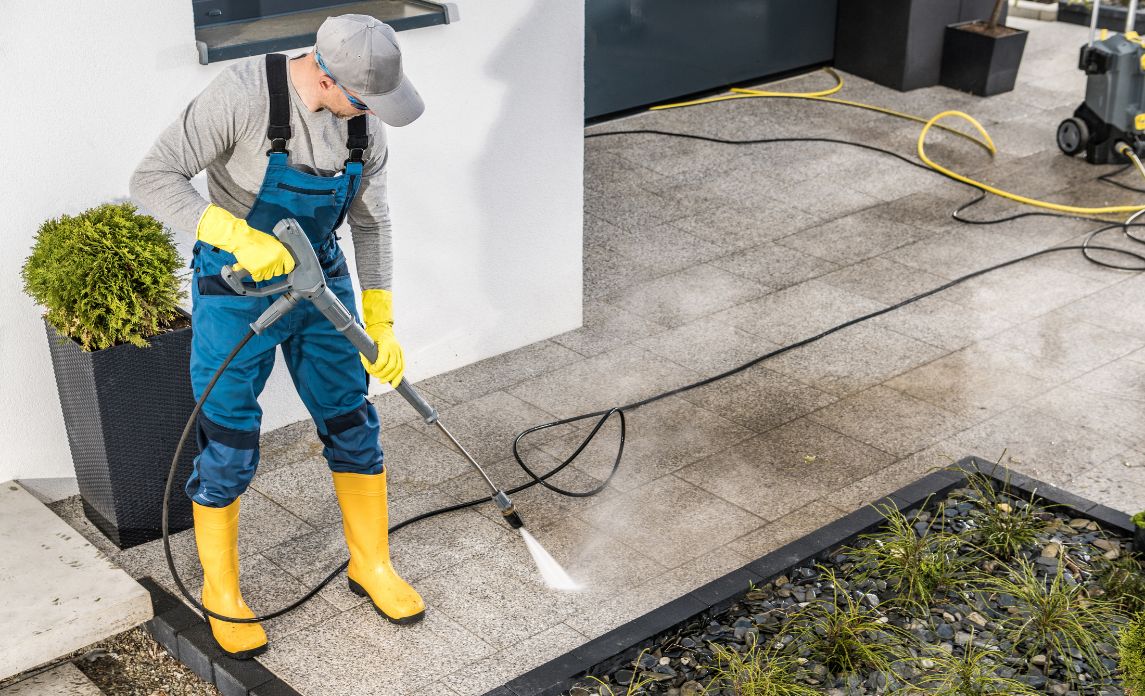
– Hardscape last (driveway, pavers, patio, because you’ll track grit everywhere)
And keep the wand moving. Park it in one spot and you’ll carve a signature into wood or etch concrete like you meant to.
The forgotten villain: gutters and the “splash zone” strip
Gutters aren’t glamorous, which is exactly why they get ignored until the stains look like someone poured coffee down your siding.
When gutters overflow or leak at seams, the runoff hits one predictable area: the ground line, foundation face, and that 12, 24 inch band of siding right above it. That strip grows algae, holds dirt, and stays wet longer than anything else on the house.
Here’s what I check in the field (in this order):
- Dark vertical streaking under gutter seams (usually a slow leak)
- Pellet-like grit at the base of downspouts (shingle granules + debris)
- Paint bubbling or a chalky finish on lower siding
- Soil erosion channels directly under roof drip lines
If you fix nothing else, fix water control. Cleaning without drainage correction is just cosmetic.
Roof moss + shaded siding: not a “green” problem, a moisture problem
When you see moss on the north side, under eaves, behind a chimney, your house is telling you the drying cycle is broken. Shade, clogged gutters, and overhanging branches create a little rainforest up there.
Now, this won’t apply to everyone, but if you’re in a humid region or surrounded by trees, you should assume algae and moss are *inevitable* unless you actively prevent them.
A quick technical note: roof moss holds moisture against shingles, and that accelerates granule loss and edge lift. On siding, persistent dampness feeds mold and can trigger paint failure and wood rot (especially on older trim boards).
One practical move that’s boring but effective: trim back branches to increase airflow and sunlight. Washing helps, but drying prevents.
Data point: The Asphalt Roofing Manufacturers Association (ARMA) has long warned that algae and moss retain moisture and can contribute to premature roof wear; their consumer guidance commonly emphasizes keeping roofs clear of debris and addressing growth early. Source: ARMA consumer resources (asphaltroofing.org).
“Can I just blast the driveway?”Yeah… but that concrete has a memory.
Concrete feels indestructible until you etch it. I’ve seen perfectly good driveways turn permanently striped because someone used a zero-degree tip like it was a laser cutter.
Here’s the real decision point: after cleaning, do you seal or stain?
#Seal vs. stain (my opinionated take)
Sealant is the practical grown-up choice for most people. It’s protection-first: moisture resistance, easier cleanup, fewer oil stains soaking in.
Stain is aesthetic-first. It can look fantastic, especially on older slabs that have visual patchiness, but it won’t “armor” concrete the way a quality sealer does.
A simple way to decide:
– If you deal with freeze-thaw, road salt, lots of rain → lean seal
– If you care most about color/character and don’t mind periodic refresh → consider stain
(And please, let the slab dry properly before applying anything. Trapped moisture under sealer is how you get clouding and peeling.)
Wood decks and fences: you’re not cleaning dirt, you’re managing fibers
Pressure-treated wood is still wood. It has grain. It has softness. It also has a limit before it turns furry and splintery.
If your deck “looks clean” but feels rougher afterward, that’s damage, not success.
I prefer this approach because it works and it’s forgiving:
– Use a wide fan tip and keep distance (8, 12 inches is a decent starting range)
– Spray with the grain, not across it
– Pre-treat with a wood-safe cleaner, then lightly agitate with a brush
– Rinse gently and don’t overwork one board
In my experience, most deck disasters come from impatience. People crank pressure to avoid scrubbing, and the wood pays for it later with premature staining failure.
Brick and stucco: the “white powder” and the cracks that matter
Efflorescence is that white, dusty deposit that shows up after rain or irrigation. It’s mineral salts migrating through masonry, and it’s basically a sign that water is traveling where you don’t want it.
A quick field test: rub it with your fingers. If it powders off, it’s likely efflorescence. If it smears or feels slimy, you may be dealing with algae or biofilm instead.
Cracks are trickier. Stucco hairlines can be normal; step cracks in brick near corners can signal movement; horizontal cracking can be a bigger structural conversation. Tapping for hollow spots on stucco can reveal delamination (that dull “thunk” is not your friend).
Pressure washing won’t fix any of that. Worse, aggressive washing can drive water deeper into a wall system that already has moisture issues.
Windows and trim: small stains, big clues
This is the stuff homeowners notice last, which is funny, because it’s often the earliest warning of failure.
Mineral spotting on windows can indicate overspray from sprinklers or hard water runoff. Trim grime packed into corners can hide peeling paint lines and soft wood. And once water gets behind trim, it doesn’t politely stop.
Use low pressure, or skip the washer entirely here. A soft brush, mild cleaner, and a careful rinse beats blasting caulk joints all day.
Here’s the thing: windows and trim reward precision, not force.
A washing plan that doesn’t wreck your house
No perfect template exists, but a safe workflow looks like this:
1) Protect landscaping. Wet plants first, cover delicate shrubs, avoid soaking soil with chemicals.
2) Inspect before you spray.Loose paint? Cracked mortar? Warped siding? Adjust method.
3) Choose the right tool.Wide fan nozzle for siding.Surface cleaner for flat concrete. Low pressure for anything painted or aged.
4) Work top to bottom. Overlapping passes, steady pace, consistent distance.
5) Rinse thoroughly. Soap left behind becomes a dirt magnet (and causes streaking).
Occasional aside: if you’re fighting grime every season, it’s not just “dirt.” It’s drainage, shade, and airflow.
The maintenance rhythm that actually prevents the ugly stuff
Twice a year beats one heroic weekend every three years. Spring and fall are the sweet spots for most climates.
What I like homeowners to schedule:
– Gutter clean + splash zone inspection: spring and late fall
– Shaded siding check: mid-summer (that’s when growth shows up)
– Driveway/patio deep clean: once a year, reseal on the product’s cycle
– Deck/fence wash: before staining/sealing, and spot-clean as needed
– Brick/stucco walkaround: after heavy rains to catch new efflorescence/cracks
Keep a simple note on your phone with dates and products used. It sounds nerdy. It also prevents you from resealing too soon, washing too aggressively, or forgetting the one downspout that always clogs.
Pressure washing is easy. Maintaining a house is harder. The trick is using the washer like a scalpel, not a sledgehammer.